Showing posts with label alzheimersideas. Show all posts

Sunday, September 15, 2019

More activity ideas for fall

Image result for autumn picture

Activities directors, caregivers, and healthcare professionals,here is some great information

Here is a great dementia resource for caregivers and healthcare professionals,

Your residents will love the Amazon Kindle Fire

Here is information on being the best caregiver you can be

Here is a way for nurses administrators, social workers and other health care  professionals to get an easyceu or two

Follow alzheimersideas on twitter

The Dementia Caregiver's Little Book of Hope [Kindle Edition]

Before Fall is over
Exercise Programs: November Stretch, Fall Fanbourines, Pumpkin Pass, Autumn Moves, Fall Fitness, Up And At ‘Em, Rhythm Band, Pilgrim’s Parachute, Thanksgiving Stretch, Work Off The Turkey, Swaying Scarves, Let’s Get Moving: Put on some soothing music and lead your residents in very slow, gentle movements such as stretching out arms, hands, moving their heads slowly side to side etc. Demonstrate the movements for them and or help them by lifting their arms etc. You can add props to your exercise programs to make it more stimulating and promote additional movement. Try scarves, batons, streamers etc. courtesy of activitytherapy.com

Thursday, August 22, 2019

Why Alzheimer's and Other Dementia Caregivers Should Be Honored This Labor Day


Activities directors, caregivers, and healthcare professionals,here is a game for those with dementia and other long term care residents

Here is a great dementia resource for caregivers and healthcare professionals, 

Your residents will love the Amazon Kindle Fire

Here is information on being the best caregiver you can be

Here is a way for nurses administrators, social workers and other health care  professionals to get an easyceu or two


Follow alzheimersideas on twitter


The Dementia Caregiver's Little Book of Hope [Kindle Edition]


As an Activity professional of clients or residents with Alzheimer's disease and other dementias, you should be honored along with the other 50 million caregivers worldwide.

See what other caregivers do and why you should all be honored this Labor Day

click here to read the article

Monday, July 8, 2019

Simple sun facts

Image result for sun pictures

Fun in the Sun Day is almost here
The Sun gives life to the Earth and the Earth would have no life at all without the energy it receives from the Sun.
     Starts


  • The Sun is only one of millions and millions of stars in the Galaxy.
       Starts
  • We see it as a large round red ball only because we are much closer to the Sun than to any of the other stars.
       Starts
  • Other stars may be larger, brighter, smaller or fainter than our Sun but they are so very far away that we only see them as points of light in the night sky.
       Starts
  • The Earth is one of nine planets that orbit round the Sun in what we call the Solar System.
       Starts
  • Solar is the adjective from Sun and comes from the Latin word for Sun – sol, which also gives us the French soleil. (and the word for Sun in several mother European languages).
       Starts
  • The Sun measures 2,715,395 miles (4.730,005 kilometres) right round (diameter).
       Starts
  • The Sun is 92.96 million miles or 149.6 million kilometres from the Earth.
       Starts
  • The Sun is bigger than can really be imagined, over one million times bigger than the Earth.
       Starts
  • This measurement is taken as one Astronomical Unit and is how we measure distances in our Solar System
       Starts
  • Like all stars, the Sun is composed of a great burning ball of gases. It is made of 92.1% hydrogen and 7.8% helium (helium is from the ancient Greek word helios, which means Sun).

    •   The Sun
      Figure 1. The burning heat of the Sun
    • The Sun has six layers.


    • The centre of the Sun is its core which produces all the Sun’s energy.
         Starts
    • Around the core is the radiative zone, which carries the energy out from the core.
         Starts
    • It takes about 170,000 years for the Sun’s energy to move from the core through the radiative zone to the next layer, the connective zone.
         Starts
    • From the connective zone, great bubbles move into the Sun’s surface, the photosphere.
         Starts
    • From the photosphere the Sun’s radiation escapes to the earth as sunlight.
         Starts
    • It takes about 8 minutes for the sunlight to be seen on the earth after it has left the Sun.
         Starts
    • Outside the Sun’s surface, or photosphere, are two further layers of light gases, the chromosphere and the corona (Corona means “crown” in Latin).
         Starts
    • These are too faint to be normally seen against the much brighter photosphere but they can be seen on a very dull day or during a solar eclipse (Look at figures 2 and 3.).
         Starts
    • In very bright weather it is dangerous to look directly at the Sun without protective glasses.
         Starts
    • On a dull day when the sky is overcast, you can often see the Sun’s corona – the bright layer around the Sun’s photosphere.
      The Sun on a hazy day
      Figure 2 The Sun's corona - the hazy bright area around the Sun, seen on an overcast day.
    • As the moon orbits round the earth, it very occasionally comes between the Sun and the earth.
         Starts
    • This shuts out most of the light of the Sun and is called a solar eclipse. Sometimes only part of the moon comes between us and the Sun: this is called a partial solar eclipse.
         Starts
    • In a total solar eclipse it is often possible to see chromosphere, the layer of thin gas between the Sun’s surface and the Sun’s corona.  You may be able to see the chromosphere as a thin red line in Figure 3 with the corona outside it.
      The Sun Eclipsed
      Figure 3. The moon has eclipsed the Sun which cannot be seen. Only the chromosphere and corona of the Sun can be seen.
    • Sometimes darker spots are seen on the surface of the Sun. These are magnetic areas which are cooler than the rest of the Sun. They are called Sunspots.
         Starts
    • Many civilisations, such as the Aztec civilisation in Mexico, have worshipped the Sun.
         Starts
    • Many prehistoric stone circles, such as Stonehenge, are thought to have been built as part of religious worship involving the Sun.
         Starts
    • In the past many people believed that the Earth did not move and that the Sun rotated round the Earth.
         Starts
    • The first scientist to suggest that the Earth and other planets moved round a fixed Sun was Aristarchus of Samos (310-230 B.C.) – more than 2000 years ago.
         Starts
    • The scientist Ptolemy, however, writing more than 300 years later, in 140 A.D. said that the Earth was the centre of the universe.  This was believed for another 1400 years.
         Starts
    • The great Polish scientist Nicholas Copernicus (1473-1543) published a book at the end of his life, in 1543,  in which he tried to prove that the planets orbited around the Sun; the book’s title was De Revolutionibus Orbium Coelestium (Concerning the revolution of the heavenly spheres).
         Starts
    • Those people who agreed with Copernicus were often imprisoned and even executed for suggesting that the earth moved round the Sun.
         Starts
    • The work of the Italian Galileo (1564-1642) and the German Johann Kepler (1571-1630) reinforced Copernicus’ theory.
         Starts
    • The theory of the Solar System was not really fully accepted until the great English scientist Isaac Newton (1642-1727) published his works on the theory of gravity and finally proved that the planets orbited around the Sun. 
    Useful Websites
    NASA Website
    Star Child
    The Sun - Videos

    Thursday, April 18, 2019

    Do not forget the ladies in nursing homes on or around Mother's Day


    Activities directors, caregivers, and healthcare professionals,here is some great information

    Here is a great dementia resource for caregivers and healthcare professionals,

    Your residents will love the Amazon Kindle Fire

    Here is information on being the best caregiver you can be


    Here is a way for nurses administrators, social workers and other health care  professionals to get an easyceu or two

    Follow alzheimersideas on twitter


    Choosing the right present for someone with Alzheimer's disease or a related dementia is certain to give him/her joyful times independently or with a loved one. Here are some tips on how to pick a perfect gift. You can give a gift anytime, but Mother's Day is coming soon which is a perfect opportunity to give that special someone a special gift.

    Over 5.3 million Americans are living with dementia. Is one of them someone you know or a client of yours? Get him/her or anyone with Alzheimer's disease or another dementia, a gift that will keep on giving.

    Of course, person appropriate offerings are the best. This means matching a gift to a person's interests and abilities, However, there are some presents that will make them smile no matter what.

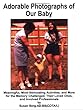
    One such gift is a book by Susan Berg called Adorable Photographs of Our Baby -- Meaningful, Mind-Stimulating Activities and More for the Memory Challenged, Their Loved Ones and Involved Professionals, This book features baby photographs that seniors with dementia love. This book shares a plethora of ideas and resources for you. Mothers especially love babies

    Another gift dementia persons will fancy is a classic musical video or DVD especially a musical love story. A classic movie of this type is Rogers and Hammerstein̢۪s movie, Carousel (1945) or South Pacific (1949)

    Any Roger's and Hammerstein movie is a good choice, However matching their interests and favorite actors and actresses should simplify the gift giving process. You can even discuss some of the movies to get a better feel for the one they might like the best.

    A video sing along is great for persons who has Alzheimers disease or another dementia. Even if they were not music lovers in the past, music is extremely therapeutic for them. Often non-verbal folks with dementia will sing along to a song that is familiar to them. Russ Carlton has a series of videos that will enchant a person with dementia.

    An audio cassette or CD is another good choice. Just as with the movies, talking about songs often brings to light a good musical selection. There are some by Mitch Miller that are favorites of many. Also Broadway tunes are a preference of those with Alzheimers disease or a related dementia.

    Especially for a lower functioning person with dementia is the gift of hand or body lotion. Any kind will do. Just be aware of any allergies or pain issues he/she might have. If he/she can tolerate it, those with a pleasant scent work well. Give him/her a relaxing hand massage talking about how good the hand massage feels and how much you love this person,

    If you cannot afford or do not have time to get these gifts before Mother's day, give the gift of yourself. No matter how hard it is for you to visit a dementia person, he/she will appreciate your company even though he/she may not be able to express it. Take him/her for a walk, sing some of your favorite songs together, or share some messages of love. Just spend some quality time with a dementia person. Both of you will feel better. Do remember to be upbeat animated and excited about visiting.

    A phone call or a Mother's day card will do if there is no way you can visit in person. At least they will know you are thinking of them. Then visit on another day.

    So no matter what you do, do not forget your favorite lady friend with dementia this Mother's day because it will make you and her feel good. What could be better than that?

    Order most of the products mentioned in the article at Amazon.com or from the artists directly

    Tuesday, November 20, 2018

    An activity about mittens

    Activities directors and other healthcare professionals here is a great dementia resource for caregivers and healthcare professionals.


    Here is information on being the best caregiver you can be


    Here is a way for nurses administrators, social workers and other health care  professionals to get an easyceu or two


    Follow alzheimersideas on twitter

    The Dementia Caregiver's Little Book of Hope [Kindle Edition]

    Winter will be here before you know it. Here is a story just for winter that is sure to please your residents. Mitten Tree Day is in early December

     Why not subscribe to the Activity Director Today E-Magazine

    YouTube


                                                           The Mitten by Jan Brett


    Friday, October 12, 2018

    Dementia Patients Find Comfort in Robot

    Activities directors and other healthcare professionals here is a great dementia resource for caregivers and healthcare professionals.

    Here is information on being the best caregiver you can be

    Here is a way for nurses administrators, social workers and other health care  professionals to get an easyceu or two

    Follow alzheimersideas on twitter


    By Fredrick Kunkle
    Washington Post Staff Writer


    One of the hottest therapeutic toys for people with dementia looks like a stray from the North Pole.

    And it is a toy, sort of.....click here for more

    Monday, October 1, 2018

    Community activity that is sure to highlight your facility

    Activities directors, caregivers, and healthcare professionals,here is some great information

    Here is a great dementia resource for caregivers and healthcare professionals,

    Here is information on being the best caregiver you can be

    Get your subscription to Activity Director Today's e magazine


    Here are some easy fun, yet mind stimulating activities anyone can do with someone who has dementia.


    We are having a health and wellness fair If you live in or near Danvers, Massachusetts, make sure to join us If for nothing else, come for lunch.

    Here is part of the press release about it


    This Wednesday, Hunt Nursing and Rehabilitation Center, 90 Lindall Street, Danvers Massachusetts, is having a free Chicken Soup for the Soul Heath and Wellness Fair from 10am-3pm.

    Susan Berg, author of Adorable Photographs of Our Baby-Meaningful Mind Stimulating Activities and More for the Memory Challenged, Their Loved Ones and Involved Professionals a book for those with dementia and an excellent resource for caregivers and healthcare professionals, will be discussing Alzheimer's disease, prevention,symptoms and treatment.

    Also available at this health and wellness fair is....read the whole press release

    Friday, September 21, 2018

    More about Columbus Day and dementia


    Activities directors and other healthcare professionals here is a great dementia resource for caregivers and healthcare professionals.


    Here is information on being the best caregiver you can be


    Here is a way for nurses administrators, social workers and other health care  professionals to get an easyceu or two


    Follow alzheimersideas on twitter

    The Dementia Caregiver's Little Book of Hope [Kindle Edition]


    Activities Directors, caregivers, and others resposible for activities

    Here’s some history trivia to share with your residents:

    Italian mariner Cristoforo Colombo is called Cristobal Colon in Spanish, Cristovio Colombo in Portuguese and Christopher Columbus in English.
    Columbus did not set out to discover a New World. He was obsessed with finding a westward route to Asia.

    In January 1492, Columbus obtained the support of King Ferdinand and Queen Isabella of Spain.
    Columbus’ fleet included the Nina, the Pinta and the Santa Maria. On his first voyage to the New World, Columbus commandeered the Santa Maria.

    The Santa Maria was shipwrecked off the coast of what is now Haiti.
    Columbus declared himself the governor of the island of Hispaniola.
    Columbus made a total of four voyages to the New World, specifically the West Indies.

    During his third voyage, Columbus was returned to Spain in shackles.
    The first recorded celebration of the discovery of America took place in New York City on October 12, 1792 — exactly 300 years after Columbus landed in the New World.
    One hundred years later, President Harrison encouraged citizens to participate in the 400th anniversary of Columbus’ voyage.

    On this day, the Pledge of Allegiance, written by Francis Bellamy, was recited publicly for the first time.

    In 1937, President Roosevelt proclaimed October 12 as Columbus Day.

    In 1971, President Nixon made the second Monday of October a national holiday.

    Saturday, September 15, 2018

    How to celebrate Columbus Day with those who have dementia

    Activities directors, caregivers, and healthcare professionals,here is some great information
    Here is a great dementia resource for caregivers and healthcare professionals,

    Here is information on being the best caregiver you can be

    Here is a way for nurses administrators, social workers and other health care professionals to get an easyceu or two


    Follow alzheimersideas on twitter

    In early October we celebrate Columbus Day. Most people with dementia remember learning about Columbus in school. You can design a trivia game using simple facts. First you can tell the story of Columbus sailing to
    America to your audience of one or more.

    Then you can have a discussion about Columbus Day.


    After the discussion, you can make up your own trivia game using facts in the story as well as any information the group member(s) want to include.

    Here are some sample trivia questions:


    The person who discovered
    America was______________(Columbus)
    The year Columbus discovered
    America was___________(1492)
    The ship that starts with the letter N that was in the Columbus fleet was the ________________(Nina)
    Design as many questions as you can think of.
    A little while later, see how many questions the person with dementia can answer.

    Then you can sing some patriotic songs.

    Finally you can discuss what most Americans do on Columbus Day.

    Hopefully you have the day off and can have a nice relaxing day with your friend with dementia.

    Remember to leave your comments and questions

    A good book to share with those who have dementia

    Adorable Photographs of Our Baby-Meaningful Mind Stimulating Activities

    Friday, September 7, 2018

    World Alzheimer's Day is September 21. Be part of it.

    Activities directors and other healthcare professionals here is a great dementia resource for caregivers and healthcare professionals.


    Here is information on being the best caregiver you can be


    Here is a way for nurses administrators, social workers and other health care  professionals to get an easyceu or two


    Follow alzheimersideas on twitter


    The Dementia Caregiver's Little Book of Hope [Kindle Edition]

    Author and Activities Director, Susan Berg, says "It is everyone’s duty to embrace this day because there is no time to lose when fighting the battle of preventing this terrible disease." Here are some simple things you can do

    What do you know about Alzheimer’s disease and related dementias?

    How can you decrease your chances of getting these disease?

    How can you help someone with Alzheimer’s disease or a related dementia?

    This year’s theme is "No time to lose" with a focus this year on caregivers by emphasising and celebrating the contribution they make to society and giving them the recognition they deserve!

    Yes, there is an urgency for all to learn about these diseases and do what they can to prevent them in themselves. Also legislators need to be contacted so more funds can be allocated for research. World Alzheimer’s day, on Sept 21, is the perfect time to do this.

    Approximately twenty five million people worldwide already have Alzheimer’s disease or a related dementia. The number will continue to grow as the baby boomers reach the age of retirement.

    What can you do right now to lessen your chances of getting these diseases?

    1. Stop smoking! There is nothing positive about smoking. Studies have shown that smoking not only raises your chances of developing dementia, but it also increases your chances of getting other diseases.

    2. Eat a healthy diet. Research suggests that the Mediterranean diet staves off the onset of dementia

    3. Keep mentally active. Again studies have shown this, to be a way to delay the onset of dementia.

    4. Keep physically active. Research indicates that moderate exercise at least a half an hour three times a week is another way to keep dementia from affecting you.

    How can you help others?

    Donate to the Alzheimer’s Association. Give your time and/ or money. Help with special events. Organize fund raisers.

    Susan Berg has written a book called, Adorable Photographs of Our Baby, for those with dementia, their caregivers, and interested professionals.
    She is donating money to the Alzheimer’s Association for each book she sells. She is passionate about educating others on these diseases. Visit her blog at http://dementiaviews.blogspot.com.

    You or someone you know could develop symptoms tomorrow. The cost of caring for those with Alzheimer’s disease or a related dementia is expensive monetarily, physically, emotionally, and psychologically.


    So please acknowledge World Alzheimer’s Day, September 21

     World Alzheimer's Month

    Sunday, May 6, 2018

    Simple Dementia Activities

    Activities that ANYONE can do with a RESIDENT with or without dementia


    Activities directors, caregivers, and healthcare professionals,here is some great information


    Here is a great dementia resource for caregivers and healthcare professinals,

    Your residents will love the Amazon Kindle Fire

    Here is information on being the best caregiver you can be

    Here is a way for nurses administrators, social workers and other health care  professionals to get an easyceu or two

    Follow alzheimersideas on twitter


    There activities can be done with dementia residents and others looking for some thing to do
    I have given this list to CNAs and other non activity personal
    *All residents should be toileted on a regular basis
    *Beverage Distribution-be aware of consistency 
    What are your favorite drinks,for winter, for summer, at night,before going to bed etc.-give choices such as do you like apple juice or ginger ale
    *Snack Distribution-be aware of diets
    Remember RESIDENTS MAY NOT REMEMBER WHAT YOU SAID OR DID, BUT THEY WILL REMEMBER HOW YOU MADE THEM FEEL!!
    *Hand Massages-cutting,filing, and polishing nails-have a conversation with the resident while doing this
    *Appropriate TV WATCHING Anytime Animal Planet or Game Show Network
    M-F Rosary, Price is Right 
    Satirday evening Lawrence Welk -Sunday am Mass 
    there are plenty of good appropriate movies, Lawrence Welk tapes and other Sing alongs. Join the residents in singing-MANY OF YOU are very TALENTED- *If residents are supposed to be watching TV, make sure they are facing the TV
    **Before meals or any time you have a few minutes-Look at a magazine or newspaper with a resident
    -Do simple word searches or crossword puzzles with the residents
    -Ask trivia questions
    -Do abcs of most any subject-Name all the flowers you know that start with a, then b etc.
    -Play simple card games-Pass out 1 card to everyone- then before you give a second card to a resident ask if that card will be higher or lower than the one they have. Cheer for them if they are right. If they are wrong say great try. Have others give their opinions as to whether the next card of someone else will be lower or higher
    -Have residents fold,sign and give cards to others. Read the card to the residents. Talk about times when you get or give cards 
    THANK YOU
    email
    alzheimersideas@gmail.com for more ideas or if you have questions

    Friday, May 4, 2018

    How to Talk to Someone With Dementia: New Insights

    Activities directors and other healthcare professionals here is a great dementia resource for caregivers and healthcare professinals,

    Here is information on being the best
    caregiver you can be

    Here is a way for nurses administrators, social workers and other health care professionals to get an easyceu or two

    People with dementia remember more than it may appear, says a small but interesting new study from the UK's University of Dundee. All knowledge isn't lost forever, as it may appear when the person is asked something and blanks on a correct response. That knowledge may be retrieved if the person is asked questions in the right way. The researchers found that when subjects were asked the meaning of words, they often couldn't say. But when the same information was asked in different ways, with more context, they often did remember.

    Some related tips on how to talk to someone with dementia to boost their understanding:

    Be as clear and specific as possible.
    Instead of: "Do you remember Mary?"

    Try: "Here's Mary, your cousin. She used to live next-door to you in Chicago."

    Instead of: "What do you want for lunch?"

    Try: "Do you want to eat a turkey sandwich?"

    Use short sentences. Give one instruction at a time.


    Wednesday, December 27, 2017

    A creative activity for those with dementia


    Activities directors, caregivers, and healthcare professionals,here is some great information

    Here is a great dementia resource for caregivers and healthcare professionals,

    Your residents will love the Amazon Kindle Fire

    Here is information on being the best caregiver you can be

    Here is a way for nurses administrators, social workers and other health care  professionals to get an easyceu or two

    Follow alzheimersideas on twitter

    The Dementia Caregiver's Little Book of Hope [Kindle Edition]


    Engaging in creative endeavors is vital for long term care residents. It is an important
    way to keep them thinking. It keeps their minds working and raises self esteem.

    One such activity that easily encourages creativity, I call, A Picture is Worth a Thousand Words

    This is an easy activity to do as long as you have the right picture for participants to describe and the right frame of mind to facilitate the discussion of the picture. As with any activity you need to adapt and modify it so that it is success oriented and failure free.

    Use a picture that is colorful with large, easy to describe items, that interests your audience.

    Baby photographs are one type of picture that seems to have universal appeal for nursing home residents especially those with dementia. an ideal book and flash cards Adorable Photographs of Our Baby
    You act as the facilitator in some cases. Be ready to help the participants with discussion questions

    Before you show the person(s) the picture, tell them you are going to help them write a
    story about a picture because you know they are smart and have good ideas.

    Now you are ready to show the picture(s) to the members of the group. As you ask the
    questions, make sure you show the picture to the participant(s) that you are directing
    the questions to. You or someone in the group can be the eyes for visually impaired
    participants. However, you will see that the discussion may take on a life of its own
    where the picture may not even be needed. Think of the picture as a story starter

    You might begin with the question, “Do you like this picture?”

    If the majority of the audience says, “No”, use a different one. It is important to have at
    least two pictures available in case this happens.

    Now that you have a picture most group members like, you want to ask a series of
    questions about it.

    As you ask the questions about the picture, note any remarkable responses. That is,
    statements about the picture that will make the story interesting. Remember to assist
    members of the audience with answers to questions by providing the help they may
    need.

    For example, if they are having trouble deciding what season is shown in the picture,
    talk about the seasons of the year, by asking them to name the seasons. If they are
    having trouble, give them a choice of two. If there is still some confusion, say that the
    baby and the lady are wearing swimsuits. Ask about the season that swimsuits are
    worn in etc.

    Understand that you can ask any question that you want to, which will help facilitate the
    discussion.


    You may have to give two choices for an answer to a question if you do not get any
    response from an open ended question. An example to the question, “How is he
    feeling”, might be: “Is he happy or sad?” If you still don’t get a response, then say, “I
    think he is happy because he is smiling. Do you agree (say the participant’s name)?”
    Then you might extend the thought by asking about the baby’s face. There is a good
    chance a participant may say that the baby is smiling. You could ask what kind of smile
    he has etc... You can include these facts in the story when you write it.

    Emphasize that there are really no right or wrong answers to any of the questions. Tell
    them that it is just what they think the answer is. Again stress that you know how smart
    and creative everyone is.

    Thus this is a good creative outlet for long term care residents even if they have
    limitations.

    You may want to have the group members suggest an opening line to the story such
    as: “Once upon a time”, “One sunny day”, “A few days ago” or whatever works.
    After you have compiled all the answers to the questions, write a simple story about the
    picture using all or some of the answers given.

    Then, later on, show the picture and read the story perhaps noting some great remarks
    of those that participated. Of course, be complimentary. You may want to post the story
    or create a short story book. Sometimes I share ideas that were expressed in this
    group to family members.


    Adorable Photographs of Our Baby, flash cards, are ideal for this activity


    As with any activity, a sure way to guarantee success is for you or the group leader to be
    animated and excited about doing the activity. Praising the participants for their efforts is
    key to a positive outcome as well


    Wednesday, March 1, 2017

    Activities for dementia care: unlocking what remains; Observing Montessori-based principles in action at an Alzheimer's unit

    Activities directors and other healthcare professionals here is a great dementia resource for caregivers and healthcare professionals.


    Here is information on being the best caregiver you can be


    Here is a way for nurses administrators, social workers and other health care  professionals to get an easyceu or two


    Follow alzheimersideas on twitter

    The Dementia Caregiver's Little Book of Hope [Kindle Edition]


    I found this article. It shares some useful information
    BNET
    Healthcare Industry

    As the rapidly falling snow swirls and blows around the courtyard outside the activities room at Menorah Park Center for Senior Living in Beachwood, Ohio, the atmosphere inside is warm and inviting on this cold December day. The weather outside might be frightful, but in here, there's a party going on
    Rose is sorting small, colorful pom-poms and placing them into the painted compartments of an ice-cube tray that match them. Milton is hard at work with a screwdriver, concentrating on driving screws into four holes that have been drilled in a smooth piece of wood, while Sadie places pegs of graduated sizes into their respective holes in a long wooden block.
    Madeline, the most verbally expressive member of this group of residents, is adeptly--and with noticeable pride--sorting a large container of brightly colored, plastic alphabet letters into piles. Besides being pleased by her accomplishment, she also enjoys the fact that she's doing a mitzvah--an act of helping someone else. She is sorting the letters to be used in an activity other residents will enjoy later.
    Another woman is putting together simple two-piece puzzles made from magazine photos that have been cut out and laminated.