skip to main |
skip to sidebar
Activities directors, caregivers, and healthcare professionals,here is some great information
Here is a great dementia resource for caregivers and healthcare professinals,
Your residents will love the Amazon Kindle Fire
Here is information on being the best caregiver you can be
Here is a way for nurses administrators, social workers and other health care professionals to get an easyceu or two
Follow alzheimersideas on twitter
Barchester.com
Partaking in group mental activities to stimulate thought, conversation and memory improves the cognitive functioning of people with mild or moderate dementia, according to researchers.
A recent study claims that cognitive stimulation of patients through structured activities in a group setting one or more times a week for at least a month can improve the symptoms of dementia.
The sessions can include a discussion of current events, a show-and-tell, or drawing, among other activities.
According to Robert Winningham, professor at the University of Western Oregon, the study shows that patients in a care home facility could have better dementia outcomes if workers make use of interaction possibilities.
"This is showing the people who work in memory care communities and nursing homes and assisted living facilities that they can improve cognitive function, and they need to be providing these kinds of interventions," he told Reuters.
The study contributes to the growing body of research that suggests keeping the brain active can help combat dementia.
Click image to enlarge
Via:
MedicareSupplementalInsurance.com
Activities directors,other healthcare professionals, and care givers above is some information you will find most interesting.
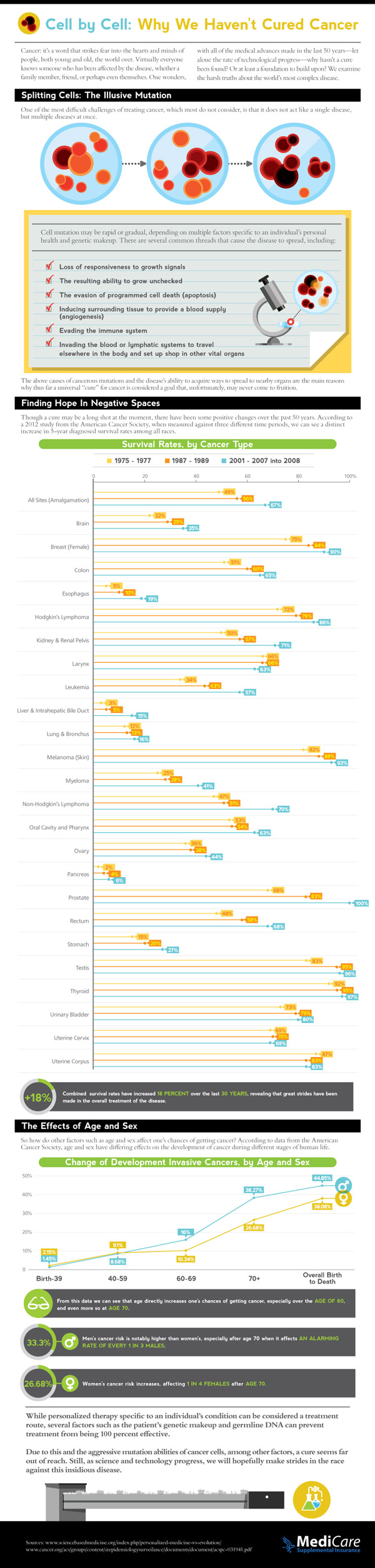
Many of the patients, clients and loved ones you care for each and everyday may have cancer. Why has no cure for all cancers been found. The answer is there are so many different types.
Advances have been madw for sure. But we sure have a long way to go.
Not surprising, the same can be said for dementia except the curing process started later.
But for both more research is the answer and then maybe we will see absolute cures for both these disease catagories
Activities directors, caregivers, and healthcare professionals,here is some great information
Here is a great dementia resource for caregivers and healthcare professinals,
Your residents will love the Amazon Kindle Fire
Here is information on being the best caregiver you can be
Here is a way for nurses administrators, social workers and other health care professionals to get an easyceu or two
Follow alzheimersideas on twitter
Medical News Today
The Journal of Alternative and Complementary Medicine reports that researchers from the Thomas Jefferson University Hospital have discovered that adults with memory impairment and memory loss may benefit from mantra-based meditation, which has a positive effect on people's emotional responses to stress,fatigue and anxiety. For their study, the researchers enrolled 15 older adults with memory problems that ranged from mild age-associated memory impairment to mild impairment, with Alzheimer's disease on a Kirtan Kriya (KK) mantra-based meditation course, that involved 12 minutes of meditation, per day, for a period of eight weeks, and a control group to listen to classical music for the same amount of time over 8 weeks. Preliminary findings revealed a substantial increase in cerebral blood flow in the patients' prefrontal, superior frontal, and superior parietal cortices, and also better cognitive function. Andrew Newberg, M.D., director of Research at the Jefferson Myrna Brind Center of Integrative Medicine explained: "We sought to build on this research to determine if changes in cerebral blood flow (CBF) had any correlation with changes in patients' emotional state, feelings of spirituality and improvements in memory. Age-associated cognitive impairment can be accompanied by depression and changes in mood. There is data suggesting that mood disorders can aggravate the processes of cognitive decline."
The findings demonstrated that participants in the meditation group showed some improvement in fatigue, tension, anger, confusion and depression, and whilst the researchers noted a substantial improvement in tension and fatigue, compared with the control group, they did not observe significant changes with regard to spirituality scores. They examined the participants' brains and other regions of interest (ROI) by using single photon emission computed tomography (SPECT) scans at baseline and at 8-weeks. The location of the scans was based on regions that the researchers earlier found were affected during the meditation tasks, and that are involved in various cognitive and affective responses. The results showed an important relationship between the change in CBF and the change of the patients' reported mood states. For instance, whilst regions like the amygdala, which impact memory formation and storage linked to emotional events, as well as the caudate, which is thought to be strongly involved in learning and memory related to depression scores, areas like the prefrontal cortex, inferior frontal lobe, parietal region, and cingulate cortex were related with tension. The fact that researchers observed substantial associations between improved scores for confusion, depression and change in verbal memory indicates that improvements of depression and confusion are linked to cognitive improvement. Dr. Newberg concludes: "This study is one of a growing body of neuroimaging studies to illustrate the neurological and biological impact of meditation, highlighting brain regions that regulate attention control, emotional states, and memory. It is a first step in understanding the neurophysiologic impact of this and similar meditative practices."
Written by Petra Rattue Copyright: Medical News Today





 Posts


